

- 2026-01-23
- qgadmin
- 01:41
Launching an online casino platform in 2026 is easier than it was ten years ago and harder than most sales decks admit.
The tools are better. The APIs are cleaner. The market is louder, more competitive, and far less forgiving.
“ This article breaks down what it actually takes to launch a casino today. Not the fantasy version, but the real stack, the real costs, and the decisions operators cannot afford to get wrong ”
What an Online Casino Platform Really Is in 2026
An online casino platform is not just a website with games.
It is a connected system that includes:
- Casino backend system
- Game aggregation and provider APIs
- Wallet and payment infrastructure
- Risk management and reporting
- Compliance and jurisdiction logic
- Frontend for desktop and mobile
If one layer is weak, the entire operation feels it.
To understand how these pieces come together, start with the full platform overview:
Casino Platform Software: Build or Buy
This is the first real fork in the road.
Building a Custom Platform
Building your own casino platform software means full control and full responsibility.
What it really involves:
- Backend development from scratch
- Ongoing API maintenance
- Security audits
- Compliance adaptation per market
- Long development cycles
Cost range in 2026:
- Initial build: €250,000 to €600,000
- Annual maintenance: €100,000+
This path only makes sense for operators with strong technical teams and long-term budgets.
Turnkey Online Casino Solutions
A turnkey online casino offers a ready-made platform where infrastructure, integrations, and backend logic already exist.
What operators actually get:
- Pre-integrated game providers
- Wallet and payment logic
- Admin panel and reporting
- Compliance-ready framework
- Faster time to market
Typical cost range:
- Setup: €15,000 to €40,000
- Monthly fee or revenue share
This model is how most new operators enter the market.
White Label Casino Platform: Speed Over Perfection
A white-label casino platform is the fastest way to launch, especially for first-time operators.
The platform provider handles:
- Technical infrastructure
- Game integrations
- Payment systems
- Platform updates
The operator focuses on branding, marketing, and player acquisition.
This is not a compromise. It is a strategic shortcut.
To see how this model works in practice:
The Casino Backend System Most Operators Never Ask About
The backend is where platforms succeed or quietly fail.
modern casino backend system must handle:
- Real-time wallet synchronization
- Bonus and promotion logic
- Player segmentation
- Risk and fraud detection
- Reporting for regulators and partners
If reporting is slow or inaccurate, trust breaks down fast.
Operators should always ask:
- How are unfinished rounds handled?
- Can I export raw data?
- How are provider discrepancies resolved?
If answers are unclear, problems are guaranteed later.
Payment Stack: Fiat, Crypto, or Both
In 2026, payments are no longer optional add-ons.
Crypto Casino Infrastructure
A growing number of operators launch directly as crypto-first platforms.
Benefits:
- Faster transactions
- Lower fees
- Borderless player access
Challenges:
- Volatility management
- Regulatory uncertainty
- Additional AML considerations
If crypto is part of your strategy:
Hybrid Payment Models
Most platforms now support both fiat and crypto wallets.
This requires clean wallet abstraction and precise transaction handling.
It also separates serious platforms from fragile ones.
Mobile Is Not a Feature Anymore
If your platform is not mobile-first, it is already behind.
A modern mobile casino platform must offer:
- Responsive frontend
- Touch-optimized UX
- Fast loading under poor networks
- Full game compatibility
Mobile is where most sessions happen and where most churn starts.
To see how mobile is handled at the platform level:
Real Cost Breakdown in 2026
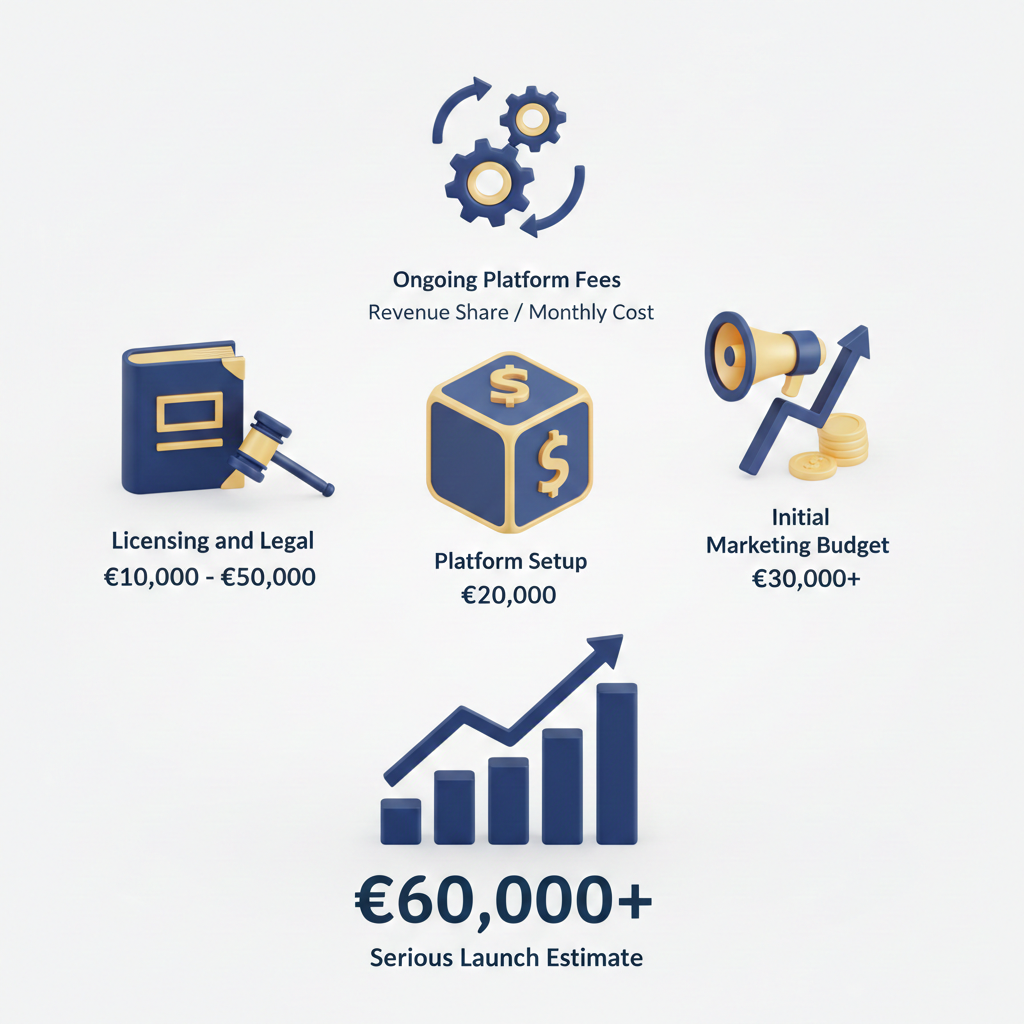
Here is a realistic entry-level estimate for launching a casino using a turnkey or white-label model:
- Platform setup: €20,000
- Licensing and legal: €10,000 to €50,000
- Initial marketing budget: €30,000+
- Ongoing platform fees: revenue share or monthly cost
A serious launch rarely stays under €60,000 if done properly.
Anything cheaper usually hides costs elsewhere.
What Operators Underestimate Most
Content Strategy
Games alone do not retain players. Lobby structure, bonuses, and personalization do.
Reporting and Analytics
If you cannot measure performance, you cannot optimize it.
Scalability
The real test comes after success, not before it.
Platforms should scale smoothly without rewriting core logic.
The Practical Operator Stack for 2026
Most successful launches follow this structure:
- Turnkey or white-label platform
- Aggregated game content
- Hybrid payment support
- Mobile-first frontend
- Scalable backend system
This stack balances speed, cost, and future growth.
Final Reality Check
Launching an online casino in 2026 is not about finding the cheapest platform.
It is about finding one that survives growth.
The right casino platform software disappears into the background and lets operators focus on acquisition, retention, and brand.
Everything else is noise.
If you want to explore platform options in detail: