

casino game API integration

Every casino platform pitch says the same thing. Fast integration. One API. Hundreds of games. Go live in weeks.
Then the contracts are signed, Slack fills up, and suddenly everyone is speaking different technical languages.

This article breaks down how casino game API integration really works behind the scenes. No buzzwords, no fairy tales. Just the mechanics operators actually deal with when connecting slots, live casino, and full gaming content through modern iGaming platforms

What Casino Game API Integration Really Means

At its core, casino game API integration is about connecting your platform to external game providers in a way that feels seamless to players and controllable for operators.
What it is not is simply adding a few game URLs to a lobby.

A proper integration handles:

This is where casino API solutions either save months of development or quietly ruin a launch timeline.

If you want a clean overview of how aggregated integrations simplify this process, start with the Aggregator Platform overview here:

The Core Components of iGaming API Integration

Player Authentication and Session Control

Every game session starts with identity. The API validates the player, checks currency, balance, and jurisdiction, and then opens a session that must stay stable even when the player switches tabs or devices.

A weak session layer leads to frozen balances, unfinished rounds, and support tickets nobody wants.

This is the foundation of any serious iGaming API integration.

casino API solutions

Wallet and Transaction Flow

This is where real money moves.

A proper integration ensures:

  • Atomic transactions
  • No double betting
  • Rollback handling for interrupted rounds
  • Provider side reconciliation

Slot games and live casino behave differently here, which is why a single generic solution rarely works without adaptation.

If you want to see how this is handled in practice across multiple providers, the API Integration page explains the full transaction flow:

Slot Games API vs Live Casino API

Slot Games API Integration

A slot games API is event-driven and fast. Bets are placed, results returned, and balances updated in milliseconds.

What operators need to think about:

  • RTP configuration per jurisdiction
  • Bonus buy compatibility
  • Free spin logic
  • Game version control

This is where providers like NetEnt and Yggdrasil show their maturity. Their APIs are predictable, documented, and battle-tested at scale.

If you want to understand how premium slot providers structure their integrations:

Live Casino API Integration

A live casino API behaves differently. Sessions are longer, bets are continuous, and streaming stability matters as much as math.

Live APIs must handle:

This is why live casino integration is never just plug-and-play.

Providers like Evolution dominate this space because their API structure is stable under pressure and their session handling is designed for long-form play.

For a real-world example of live casino API behavior:

Why Operators Use Gaming Content Aggregators

Integrating ten providers directly means ten APIs, ten update cycles, and ten different support channels.

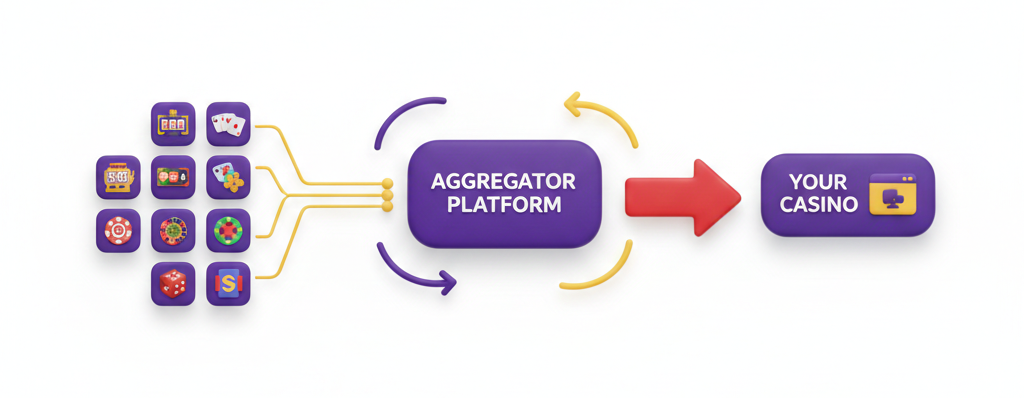
A gaming content integration layer solves this by acting as a translation engine between your platform and the providers.

gaming content integration

Through a single unified API, operators get:

This is why most modern platforms rely on aggregation instead of direct contracts.

To see how this works at scale:

What Breaks Most Casino API Integrations

Overpromised Timelines

If someone says full multi-provider integration in two weeks, they are either lying or cutting corners that will surface later.

Bonus System Mismatch

Many APIs technically integrate but fail when bonuses are applied. Free spins, cashback, and tournaments expose weak transaction logic fast.

Compliance Afterthoughts

Jurisdiction filtering, game certification, and reporting are often bolted on instead of built in. Good casino API solutions handle compliance at the routing level, not as an afterthought.

How Operators Should Evaluate an API Integration

Before integrating any provider or aggregator, operators should ask:

  • How are unfinished rounds handled
  • What happens if a provider API goes offline
  • Is wallet logic centralized or mirrored
  • How are game updates rolled out
  • Can providers be enabled or disabled per market?

If these answers are vague, problems are guaranteed later.

The Quiet Truth About API Integration

If you want to explore how this approach works across slots, live casino, and future providers:

You may be interested

Game Certification, RTP, and What Aggregators Handle for You

If you are running an online casino or planning to scale one, you probably...

Game Certification, RTP, and What Aggregators Handle for You

If you are running an online casino or planning to scale one, you probably...

Slot Providers Operators Actually Ask for (And Why)

This article breaks down slot providers for online casinos that operators...